
|
 |  |  |  |
| News Archive |
Archived news posts are sorted by date, most recent date first. There are currently 145 news items listed in the archive. |
|
| 2011-03-24 The Diamond Age | |
| Posted by AnubisTTP |
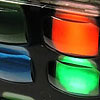
In the time before LEDs, large outdoor video displays were constructed using myriad different implausible technologies. Mitsubishi's 'Diamondvision' FMCRT Mark III is one such device, a tileable cathode ray tube with multiple electron guns, each gun dedicated to lighting a single pixel. We have managed to acquire one of these hard-to-find devices and add it to the Imaging Tubes section. Several other new things have been added to the site, including a metal clad HP LED display in the the Solid State Displays section, as well as an unusual Western Electric controller chip in the Monolithic Integrated Circuits section and a Honeywell H5 power transistor which has been added to the Discrete Semiconductors page. As some of you are probably well aware, we also have an online webstore, which is filled with a constant stream of various awesome things. New items are being added to our inventory every week, which can be viewed on the Recent Additions page. If there is a Panaplex-shaped hole in your life that only a Panaplex display can fill, we have you covered. |
 |
|
| 2011-02-23 Be Square | |
| Posted by AnubisTTP |
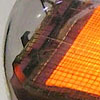
As many of our readers are now probably aware, the Soviets produced a dizzying array of bizarre display tubes that are almost never seen outside of Russia. This could be one of the strangest of them all however, an IDL1-derivative tube that incorporates an entire VFD structure just to display a single red pixel. Even more unusual, the IDL1 was apparently never made in a red version, and yet we have a red phosphor tube of this type with attached photographic evidence. Truth is stranger than fiction, and this thing is very, very strange. We have also added a new dekatron, a Z563C compact envelope counter, to the Glow Transfer Counting Tubes page, as well as two new 'Datavue' branded Nixie tubes, the CK1903 and CK8422, to the Gas Discharge Displays section. |
 |
|
| 2011-01-31 Clocking In | |
| Posted by AnubisTTP |
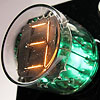
We have posted a new project in the Articles section, a single digit clock utilizing an RCA DTF104B filament display tube. Filament displays are not as often-used as Nixies in clock projects, but they have one major advantage: they can be directly interfaced to a TTL-level circuit. Barring unusual mutations like the ITS1A, all gas filled tubes require a high voltage switching network before they can be connected to a microcontroller. In other news, we have made several additions to the Electronics Museum, including an RFT VQC10D smart LED display in the Solid State Displays section, as well as an IEE 340-06-A729-1 symbol projection display in the Incandescent Displays section and a BA-16 dekatron adder in the Display and Counting Circuits section. |
 |
|
| 2011-01-10 Post-Soviet | |
| Posted by AnubisTTP |
What is the size of a paperback book and able to display swear words on command? The Russian-made UDT3, a huge single digit VFD matrix that is one of the largest single digit tube displays anywhere. These displays have flooded Ebay in recent months and we were lucky enough to receive one from Terry Kennedy, a fellow tube collector. In other updates, we have also added several other new items to the Electronics Museum, including a Tesla 11TU7 nomotron tube to the Glow Transfer Counting Tubes section, a Raytheon CK1414 'Symbolray' character-generating tube to the Imaging Tubes section, and an Atmel AT27C256R leadless carrier EPROM to the Monolithic Integrated Circuits section. |
 |
|
| 2010-12-06 RG...G? | |
| Posted by AnubisTTP |
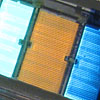
We have recently added two new unusual displays to our Electronics Museum, a Staver 402L vane display to the Incandescent Displays section, and a Soviet ILM2-9MV 'jumbotron' VFD to the Vacuum Fluorescent Displays section. Both are electronic displays designed for large format information, but these devices are otherwise polar opposites. The 402L is a mechanical 7-segment device intended for use in scoreboards, and the ILM2-9MV is a simulated 3-color pixel indicator designed to be assembled into larger full-color displays. In other news, we are pleased to announce that TubeClockDB is giving away a fully assembled YS950 Numitron Clock in their latest fourm-based contest. Want to win a free clock? Enter the contest by posting a reply in this thread on the TubeClockDB forum, before January 1 2011. |
 |
|
| 2010-11-10 These Tubes Have Real Gas | |
| Posted by AnubisTTP |
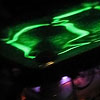
We have recently acquired an extremely unusual Soviet display, the Melz ITS1A. These neon filled devices use an array of thyratrons to display seven-segment numbers in green phosphor, and can be hooked directly up to a TTL microcontroller with no intermediate hardware. Other recent arrivals include several examples of a rare Telechron clock module with a very unusual incandescent mechanical display. These purely mechanical clock modules use an array of cam-driven shutters to draw seven segment digits on a plastic screen. We have several spares of this part, which we have listed in our online store for any experimenter who wants to build a unique display or LED project. We have also resurrected one of our articles from the early days of the website: Vintage Marking Machines. This article has been bulked up with even more information, including pictures of a marking machine so rare that it sells for over $400. What could make a marking machine so expensive? Read on to find out! |
 |
|
| 2010-10-17 Olduvai | |
| Posted by AnubisTTP |
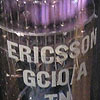
We have (finally!) added an entry to our Glow Transfer Counting Tubes section for the rare GC10A, the world's first production dekatron. The GC10A sets the form and appearance for all Ericsson counters that were to follow, though it is nearly unique in its use of a helium fill gas instead of neon or hydrogen. The AERE WITCH, virtually the only computer to make use of dekatrons, contained over 800 GC10A tubes in its memory stores. We have also added a Soviet IN12 display to our Gas Discharge Displays section and a mysterious flat-top LED to our Solid State Indicators section. In other tube related news, the large Nixie review site TubeclockDB has recently opened up a forum for the discussion of all things related to Nixie tubes and vintage displays. If you have recently scored a sack of Burroughs beam-switching tubes from an old lady's garage sale for $2.00 and feel the need to gloat, it is important to pick a venue where people will recognize the importance of internal spade resistors. |
 |
|
| 2010-09-12 One More Thing | |
| Posted by AnubisTTP |
When one thinks on the subject of alphanumeric Nixie tubes, a single device springs to mind; the iconic Burroughs 7971. Its size and popularity in various projects is so well-known, many forget that Burroughs also made other models of alphanumeric tubes. The Burroughs B5971 is just such a tube: a 13-segment Nixie display crammed into a tiny oval envelope. Even though the 5971 has less segments than a 7971, it is capable of displaying nearly every alphanumeric character. We have finally managed to obtain a sample of this tube, which can be found in the Gas Discharge Displays section. We have also added a 6AF6G tuning eye display to the Variable Indicators section, and an ETL GS10H compact dekatron to the Glow Transfer Counting Tubes section. |
 |
|
| 2010-08-21 Do You Hear That, Mr. Anderson? | |
| Posted by AnubisTTP |
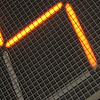
Numerous new tubes and displays have been added to the Gas Discharge Displays section in the past week, including an example of the very large NEO5000 planar gas discharge display. The NEO5000 may not be able to control the Matrix, but it, along with the NEO8000, are some of the largest Panaplex displays ever made available to the public. We have also added another planar display, the Pantek NCR08501 'mock VFD' readout, as well as two Nixie tubes, the RFT Z560M, and the crudely constructed Sovetek IN-1. |
 |
|
| 2010-07-29 Silicon | |
| Posted by AnubisTTP |
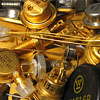
How small can you make a projection display? If it is an IEE 340 series, the answer is 'quite small indeed'. With a digit height of only 13mm, the 340 series is one of the smallest projection displays available, yet it still contains all of the optical components of much larger projection displays. While on the subject of displays, we have also added two other display devices to the site: a Futaba 9CT06 multidigit VFD display and an early Monsanto MAN6A LED display. In other news, we have also added an entire new section to the website: Discrete Semiconductors, a place to cover early transistors and diodes. Currently this section contains entries for the Sylvania 2N35, Raytheon CK718, and Western Electric 2N559 devices. |
 |
|
| 2010-07-07 Dot Matrix Revolutions | |
| Posted by AnubisTTP |
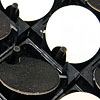
Once again, we have added a number of new items to the Electronics Museum: |
 |
|
| 2010-06-22 Objects Not to Scale | |
| Posted by AnubisTTP |
We have gone a slight bit off topic and posted a new project to the Articles page, describing the construction of a gigantic 5x7 LED matrix out of pink foam insulation and various other commonly available items. With a digit height of just over 32 inches, this is one display that even people with severe eye damage should be able to read. |
 |
|
| 2010-06-03 Forty-Eight Chromosomes | |
| Posted by AnubisTTP |
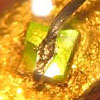
The Monsanto MV2 is a part number recognizable to any LED collector. The world's first production LED, with its iconic gold package and dim red output, was the centerpiece of any collector's stash. People trolled Internet electronics forums, searching for someone with a sample to trade. In a world of ChinaCorp 5mm LEDs, eBay auctions for MV2s commanded sobering prices. The electronics world wanted the MV2, with all its dim-red-gold-plated pedigree. |
 |
|
| 2010-04-30 Things are Made of Stuff | |
| Posted by AnubisTTP |
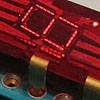
We have recently added several new items to the site, including a sample of the hard-to-find Monsanto MAN-4 to our Solid State Displays page. The MAN-4 is an early low-cost seven segment display, one which has been packaged in a standard plastic DIP instead of the PCB-and-epoxy packages of some earlier Monsanto displays like the MAN-1 and MAN-2. |
 |
|
| 2010-03-21 Pixel Art | |
| Posted by AnubisTTP |
As part of our continuing campaign to prevent the heat-death of the universe, we have been busy adding a number of quite rare devices to the Technology Museum: |
 |
|
| ©2000-2026 Industrial Alchemy. All rights reserved. | Switch to mobile version | Contact | |  |